Consider how you make purchasing decisions. Are you more likely to buy something after seeing an advertisement or if someone you trust recommends it? Most people value the opinions of friends, family members and experts.
Consumers encounter social media influencers daily and often view them as experts, particularly if they like and respect the influencer and feel a connection. If an influencer they trust recommends a product or service, consumers are more likely to follow their advice and give the brand a try.
Influencers can help businesses grow when they’re incorporated into a brand’s marketing plan with care and thought. We’ll explain more about influencer marketing and how to form strategic partnerships with the right influencers to grow your brand.
What is influencer marketing?
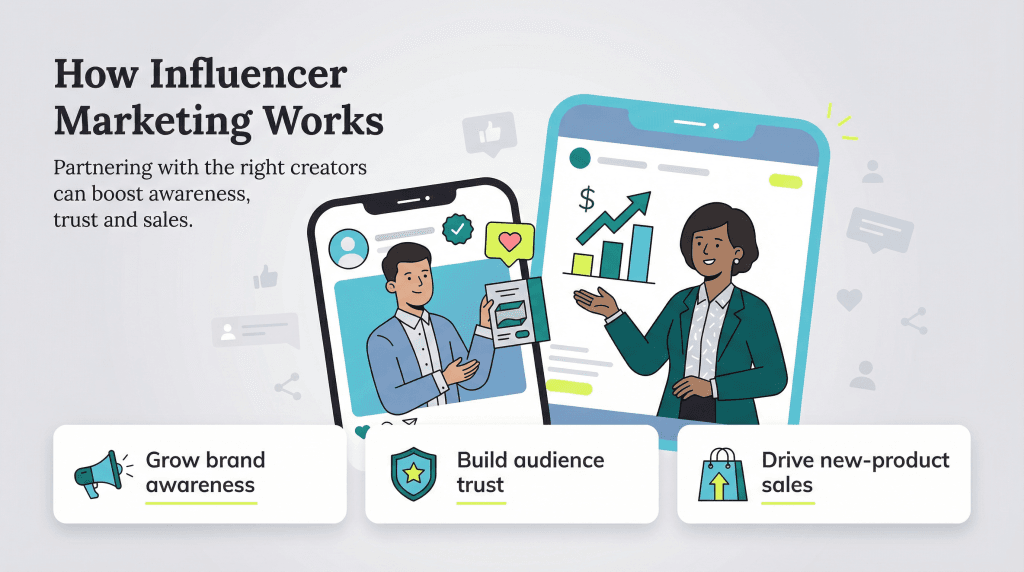
Influencer marketing is a type of social media marketing that involves social media personalities promoting your products on their channels and platforms.
Some influencers charge brands to endorse their products or services via social media posts, while others work out product deals with brands. No matter how they’re compensated, gaining an influencer’s trust is paramount. They’re putting their reputation on the line by promoting your offerings.
Influencers may have massive social media followings or smaller audiences of highly engaged followers. They can be celebrities, bloggers, trusted authorities and “internet famous” individuals with niche audiences. Influencers usually produce copious content that’s relevant to their followers, so they’re always on the lookout for new content that will appeal to their audience.
Getting the right influencer to market your products and services can improve your bottom line by increasing sales, helping you build brand authority and boosting brand awareness.
How to get influencers to market your product
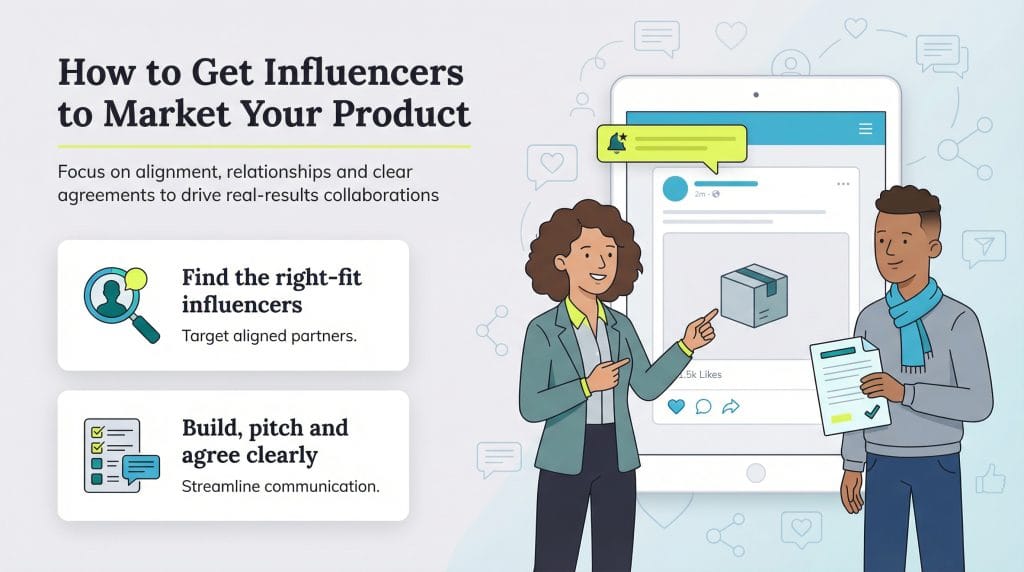
Influencer marketing has become a more nuanced marketing tactic as new-age social media marketing has evolved. Consider the following steps to find influencers and build lasting relationships.
1. Find social media influencers in your niche.
The right influencer is crucial to your social media marketing campaign’s success. While Kim Kardashian may have over 75 million X (formerly Twitter) followers, they may not be the ideal audience for your office chairs.
Maggie Winter, owner of MK Consulting, stressed that it’s crucial to know your target customers before you work with an influencer. “Small businesses should start by defining their audience,” Winter advised. “Look for influencers who already align with that audience, whether through shared values, interests or demographics.”
Several tools and platforms can help you find the right influencers — people with authority and trust in your industry:
- BuzzSumo: The online platform BuzzSumo can help you use specific keywords to pinpoint journalists and influencers. You can find influencers by topic, content, followers and more.
- NinjaOutreach: NinjaOutreach allows you to search for influencers across multiple platforms.
- Google Alerts: Google Alerts notifies you when new content appears in your industry to help you discover potential influencers and thought leaders.
2. Build a solid relationship with social media influencers.
After you identify ideal social media influencers, you must connect with them. This is where many marketers get ahead of themselves. Too often, they ask influencers to work with them before building a relationship.
Depending on their level of fame, influencers can receive hundreds or thousands of daily requests for content mentions and brand relationships. It’s crucial that they know who you are before you ask them to check out your product.
Building influencer relationships takes time, but it’s worth it. Here’s how to get started:
- Follow the influencer on their social media accounts.
- Share the influencer’s content.
- Comment on the influencer’s blog posts.
- Ask the influencer questions.
- Join the influencer’s online conversations.
Get on their radar so they recognize you and your brand when you pitch a partnership deal. Give yourself at least two to three months before you move the relationship forward.
Mariana Delgado, marketing director at DesignRush, emphasized the importance of investigating an influencer’s follower engagement level, not just their follower count, before reaching out.
“Look for real influencers with genuine engagement rates rather than those with inflated follower levels that do not translate into any type of meaningful engagement,” Delgado advised. “A smaller influencer with an engaged and committed following usually adds more value than a huge influencer with a passive audience.”
3. Research the influencer’s expected compensation.
Typically, the bigger the influencer’s audience is, the more likely it is that they will expect monetary compensation for product promotions. Learn each influencer’s rates. If you pitch them with a free product offer and they expect $500 a post, you’ll likely be rejected.
Nano-influencers — content creators with 1,000 to 10,000 followers — may be more likely to promote your product without receiving monetary compensation, but it depends on their engagement levels and niche. If you have a large following on their favorite platform, you can offer reciprocal shout-outs — you promote the influencer to your followers, and they do the same. Another option is to negotiate a smaller upfront fee plus a performance bonus.
For some context about how influencers expect to be paid, consider Influencer Marketing Hub’s State of Influencer Marketing 2024 report, which revealed that 49.6 percent of brands pay influencers based on a sales percentage, 24.1 percent of brands compensate influencers with flat payments, and 19 percent use a product-level payment structure, in which influencers are paid based on the specific product they promote or the number of units sold.
4. Create the perfect pitch to your influencer.
After you build the foundation of a solid relationship, it’s time to pitch your idea to your social media influencer. Take a personalized approach that shows you’ve done your research.
Here are some best practices for pitching a social media influencer:
- Offer to update the influencer’s outdated content. With this tactic, you contact the influencer to point out old statistics or broken links. Tell them you have new content that could replace their outdated content, and emphasize that you appreciate what the influencer does and want to help them have the latest content.
- Create exclusive content for the influencer. Exclusive content is a surefire way to get an influencer to notice you. Influencers like to share popular content such as infographics or videos. As a bonus, you’ll build links back to your website from an authoritative domain.
- Write a guest post for the influencer. Guest posting is another popular tactic for building product exposure and helping you get links back to your site. When you pitch a guest post idea, research the influencer’s blogs and subject matter. Keep your post relevant to the influencer’s niche and audience interests.
- Send the influencer product samples. If you sell physical products, ask the influencer if you can send samples for them to review and discuss. Ensure that the product aligns with their interests and maintains a high standard of quality to make a positive impression. Everyone loves a freebie, so this tactic has a high success rate.
For the best results when you’re pitching an influencer, keep the following tips in mind:
- Keep your communication concise.
- Focus on how your idea can help them.
- Discuss how your product can be useful to their followers.
- Show that you’ve read their content and are familiar with their posts.
- Ask if they’d like to see your content or product instead of making assumptions.
5. Finalize the influencer relationship with an agreement.
If the influencer agrees to work with you, it’s time to formalize the arrangement with a legal contract that spells out all obligations and guidelines. It should include the following information:
- How many posts or mentions they’ll make to promote your product
- The promotional timeline
- Which platforms they will use to promote your brand
- The content format they’ll use, such as video or photos
- How much money you’ll pay
- How many products you will provide
- If there will be reciprocal shout-outs
- Any cross-promotions you’ll conduct
- Aesthetic and branding guidelines
- Limitations or requirements for using your logo or brand name
- Whether influencer content about your brand will need preapproval before it’s published
Although there are influencer contract templates, it’s best to have a business lawyer review your contract before you send it to the influencer. Ensure the contract is fully executed (signed by the influencer and your company representative) before you begin the promotion.
Winter advised businesses to be as explicit as possible when negotiating the contract. “Be clear on deliverables,” Winter recommended. “Outline expectations, including types of content, posting schedules and tagging requirements, but also leave room for the influencer’s creativity. They know what resonates with their audience.”
Why influencer marketing works
According to the State of Influencer Marketing Report cited earlier, over 84 percent of marketers said they believe influencer marketing is effective and 85 percent said they plan to increase their influencer marketing budget.
Here’s why influencer marketing works:
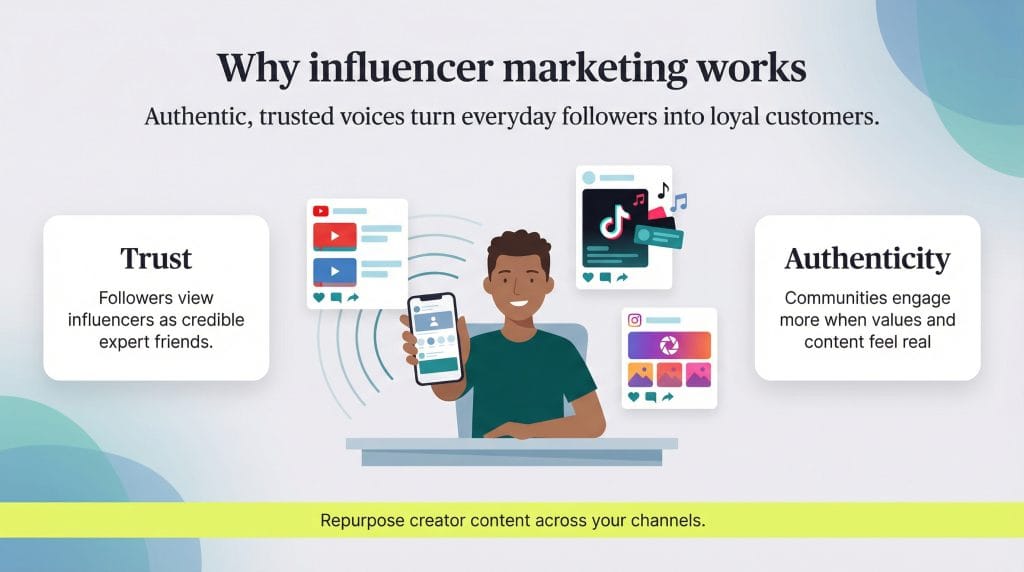
- Followers trust the influencer. Trust is a crucial reason why influencer marketing works. Influencers build trust with their followers in various ways. First, they’ve earned expert status and have clout in a particular subject. They also form relationships with their followers by engaging in conversations and sharing details about their lives, thoughts and opinions. Followers come to see the influencer almost as a friend.
- Successful influencers are authentic. Influencer marketing can work only when followers see the influencer as authentic. In fact, according to Sprout Social, 47 percent of consumers prioritize authenticity in influencers they follow, and 53 percent want to follow influencers who align with their personal values. Influencers know authenticity is as crucial as expertise. They won’t jeopardize followers’ trust by promoting a product they don’t believe in and support. When followers feel an influencer has “sold out” by promoting something disingenuously, the backlash is fierce.
Chelsea Clark — founder of momfluence, a mom-centered influencer hub — pointed out another benefit of working with social media influencers. “Working with creators not only gets your product in front of potential customers, but you typically get usage rights for the content, meaning you can use it on your channels — from social media to newsletters to even ads,” Clark explained.
Leverage influencers for a positive return on investment
Successful influencer marketing is about relationships. By showing your respect for the influencer’s work and sending them quality content, products or monetary compensation, you can leverage their influence to connect with a wider audience.
Most brands continue working with the same influencers over the long term, building stronger relationships and growing followings that create mutual benefits. Your goals will determine the success of your influencer marketing relationship. For example, you may want to build online brand awareness, reach new audiences, increase sales or boost customer engagement. No matter what your marketing goals are, you can benefit from influencers’ ready-made audiences to improve your bottom line.
link